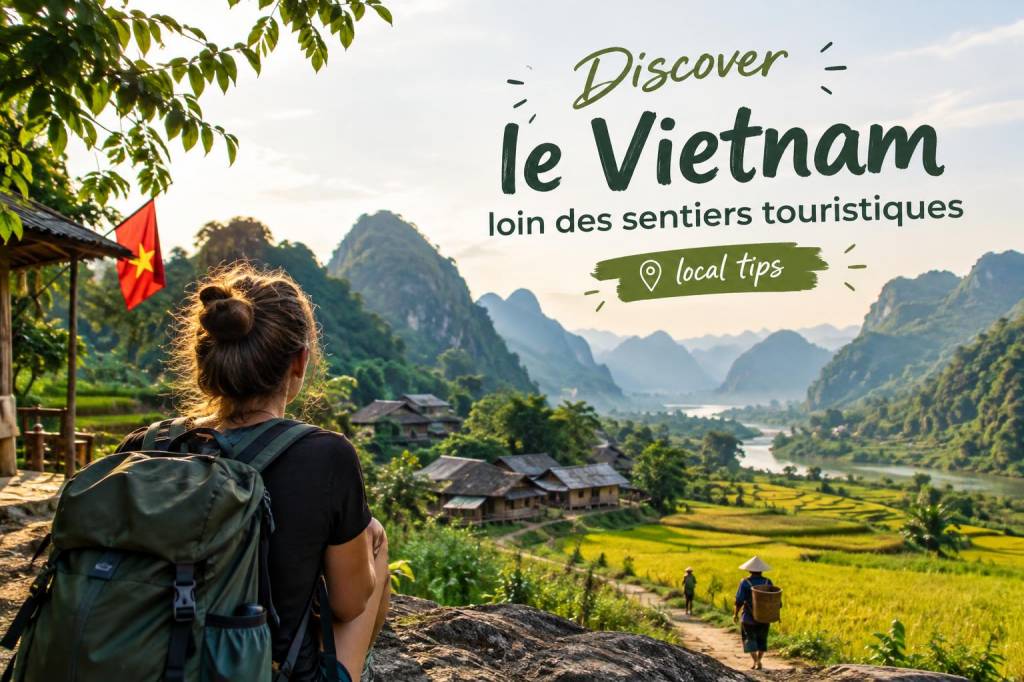
I still remember the first time I took a motorcycle off a paved road in northern Vietnam and felt the world rearrange itself: narrower lanes, wooden homes, markets that smelled of lemongrass and grilled fish, and faces that weren’t used to camera flashes. That ride shaped how I think about travel: instead of ticking major sights, I started seeking ways to découvrir le Vietnam loin des sentiers touristiques, to learn from everyday life rather than only admire it from a distance. In this article I share practical, on-the-ground guidance for travelers who — like me — want meaningful immersion, logistics that actually work, and ways to ensure their visit benefits local communities.
Why choose to discover Vietnam off the beaten path?
Vietnam receives over 18 million international visitors annually in pre-COVID peaks (2019 figure). While tourism brings jobs and infrastructure, it also concentrates wealth in a few hotspots (Hanoi, Ho Chi Minh City, Hạ Long Bay, Hội An). By deliberately seeking lesser-known places, you spread economic benefits, avoid overtourism, and experience more authentic interactions.
- More authentic daily life: In small villages I’ve seen farmers invite me to help harvest, cooks teach me family recipes, and children proudly show off schoolbooks — experiences that rarely occur in tourist centers.
- Lower cost, higher impact: A guesthouse in a remote province might cost 20–30% of a boutique hotel in major cities, but the same money goes further to the host family and local businesses.
- Environmental advantage: Reduced crowds in delicate ecosystems (limestone karsts, coral reefs, mountain trails) helps conservation.
How I plan an off-the-beaten-path Vietnam trip (step-by-step)
Planning is the difference between a chaotic “roughing it” experience and a rich, respectful visit. Here’s the method I use:
- Choose a region, not a city: Instead of saying “I’ll go to Vietnam,” I pick a region (e.g., Central Highlands, Mekong Delta islands, Cao Bằng province) and research villages, markets, and ethnic groups there.
- Layer logistics: Identify the nearest transport hub (e.g., a domestic flight to Dien Bien Phu or a train to Đồng Hới), then local buses, motorbike rentals, or shared jeeps for the last mile.
- Find local hosts and guides: Use local travel cooperatives, community-based tourism platforms, or NGOs that publish verified homestays and guides.
- Learn key phrases: A few words in Vietnamese and even the local dialect go a long way. “Cảm ơn” (thank you), “Xin chào” (hello), and a few polite phrases open doors.
- Prepare flexible timing: Festivals, seasonal harvests, and rainy seasons shape what’s possible. I plan buffer days to respond to local invitations.
Recommended regions and examples of immersive experiences
Below are regions where I’ve personally had strong off-the-path encounters and examples of what you can do there.
- Northwest (Điện Biên, Lai Châu, Hà Giang): Homestays with Hmong families, highland markets (Sunday Bac Ha market-style gatherings), and motorbike loops through karst valleys.
- Northeast (Cao Bằng, Lạng Sơn): Boat trips on slower rivers, visits to minority villages with traditional weaving, and exploring geological formations like Ban Gioc waterfall with fewer crowds than Hạ Long.
- Central Highlands (Kon Tum, Đắk Lắk): Coffee farm stays, coffee-processing workshops, and indigenous cultural nights with local storytellers.
- Central coast & islands (Phú Yên, Quy Nhơn, Cát Bà outskirts): Fishing trips with villagers, tide-pool foraging, and sleeping in small coastal hostels.
- Mekong Delta (Cà Mau, Bến Tre outskirts): Home-cooked meals on floating houses, guided mangrove walks, and participative crab-fishing.
Practical tips for respectful immersion
When I’m hosted in a family home, I follow a simple set of rules to ensure cultural sensitivity and longevity of these connections:
- Ask permission before photographing people (especially elders and children).
- Offer small, useful gifts (school supplies, medicine, seeds) rather than cash in some contexts — but ask local coordinators first.
- Dress modestly in conservative regions; remove shoes when entering homes and temples.
- Be curious but not intrusive: ask about daily routines and local festivals rather than private family matters.
- Support local services directly: pay guides, buy food at markets, and book homestays rather than foreign-run hotels.
Safety, health, and connectivity
Travelling far from tourist hubs requires extra preparedness:
- Health: Bring a basic medical kit, water purification tablets, and any prescription meds. Tap water isn’t safe to drink in most places; bottled water or filtered solutions are standard.
- Insurance: Ensure your travel insurance covers evacuation and motorcycle accidents if you plan to ride.
- Connectivity: A local SIM (Viettel, Vinaphone, Mobifone) provides decent coverage even in many rural areas. Download offline maps (Google Maps or Maps.me) and download train/bus timetables beforehand.
- Money: ATMs are sparse in remote provinces — carry cash. Small denominations (20k–200k VND) are useful for markets and tips.
Costs and statistics: what to budget
Understanding costs helps plan realistic itineraries. These are approximate averages based on my travels and recent data:
- Daily budget (backcountry homestay, basic food, local transport): 15–35 USD
- Guided community experience (half-day): 10–30 USD
- Domestic flights: 30–80 USD (if booked in advance)
- Motorbike rental (daily): 8–15 USD
Relevant statistics:
- Pre-pandemic tourist arrivals: roughly 18 million (2019, UNWTO & Vietnam National Administration of Tourism).
- Rural tourism growth: community-based tourism initiatives reported year-on-year growth in bookings of 12–25% (2018–2022) in provincial programs — an indicator of rising interest in immersive travel.
Tools and platforms I use (and recommend)
- Community-based tourism directories: Platforms like Grassroots Volunteering, and local NGO pages often curate verified homestays and workshops.
- Booking & transport: Baolau and 12Go.asia for trains, buses and ferries; local domestic airlines (VietJet, Bamboo, Vietnam Airlines) for longer distances.
- Maps & translations: Google Maps offline, Maps.me, Google Translate (download Vietnamese offline pack).
Sample 10-day itinerary focused on immersion
| Days | Region | Main activities | Why it’s off the beaten path |
|---|---|---|---|
| 1–2 | Hanoi outskirts | Home-cooked dinners with a family; cycling to rural markets | Less tourist traffic, direct domestic routes |
| 3–5 | Hà Giang | Motorbike loop, Hmong homestay, hill tribe markets | Remote highlands with few foreign tourists |
| 6–7 | Cao Bằng | Boat to Ban Gioc waterfall, village weaving demos | Border province, slower tourism development |
| 8–10 | Mekong Delta (Cà Mau) | Floating house stay, mangrove ecology tour | Far south, seasonal transport reduces crowds |
How to measure your trip’s positive impact
When I return from these trips I evaluate them not just by memories but by measurable outcomes:
- Percentage of my trip budget that went to local providers (homestays, markets, guides). I aim for at least 70% local spend.
- Number of direct hires (guides, boat drivers, cooks) rather than booking via international agencies.
- Any small, sustainable contributions like buying school supplies, supporting a local conservation tip, or hiring women-led cooperatives.
Resources and further reading
To plan responsibly and learn more, I consult reputable sources. Here are several I use frequently:
- World Bank — Vietnam overview (economic & development context)
- UNWTO (tourism statistics and sustainability guidance)
- Vietnam National Administration of Tourism (official guidelines, events)
- Lonely Planet — Vietnam (practical guides and updates)